










La botanique de J. J. Rousseau (Plate 59) by Pierre Joseph Redouté, 1805
Œuvre d’art authentique
L’œuvre que nous imprimons est fidèlement restituée à partir de la source originale - généralement un musée, une bibliothèque ou une collection privée. Nous ne remplaçons jamais, ne redessinons jamais et n’inventons jamais le travail de l’artiste à l’aide d’une IA générative.
Restaurée dans notre atelier londonien à partir de l’œuvre originale de 1805 et imprimée en qualité musée. Description complète
L’offre du collectionneur
Choisissez deux œuvres éligibles et bénéficiez de 20 % de réduction sur les deux. Choisissez-en trois et celle au prix le plus bas est offerte, pour une économie maximale de 33 %.
Associez librement des cartes standard éligibles et des tirages d’art. Aucun code n’est requis ; l’offre est appliquée automatiquement lors du paiement.
Les configurations standard réalisées sur commande sont incluses. Les formats sur mesure, les créations personnalisées et les œuvres commissionnées sont exclus.
Besoin d’une livraison à différentes adresses ? Contactez-nous avant de commander.L’offre du collectionneur
Choisissez deux œuvres éligibles et bénéficiez de 20 % de réduction sur les deux. Choisissez-en trois et celle au prix le plus bas est offerte, pour une économie maximale de 33 %.
Associez librement des cartes standard éligibles et des tirages d’art. Aucun code n’est requis ; l’offre est appliquée automatiquement lors du paiement.
Les configurations standard réalisées sur commande sont incluses. Les formats sur mesure, les créations personnalisées et les œuvres commissionnées sont exclus.
Besoin d’une livraison à différentes adresses ? Contactez-nous avant de commander. Restauré à Londres • Imprimé et encadré en the UK

Œuvre d’art authentique
L’œuvre que nous imprimons est fidèlement restituée à partir de la source originale - généralement un musée, une bibliothèque ou une collection privée. Nous ne remplaçons jamais, ne redessinons jamais et n’inventons jamais le travail de l’artiste à l’aide d’une IA générative.
Restaurée à partir de l’œuvre originale de 1805 et imprimée en qualité musée. Description complète
Choisissez votre format
Choisissez votre finition


(Plus d’infos)
Message cadeau & finition personnalisée

Si vous souhaitez ajouter un message cadeau, ou une finition (puzzle, panneau en aluminium, etc.) qui n'est pas disponible ici, veuillez le demander dans la "note de commande" lors de votre passage à la caisse.
Chaque commande est fabriquée sur mesure, donc si vous avez besoin d'ajuster légèrement la taille, ou d'imprimer sur un matériau inhabituel, faites-le nous savoir. Nous avons réalisé des milliers de commandes personnalisées au fil des ans, donc il n'y a (presque) rien que nous ne puissions gérer.
Vous pouvez également nous contacter avant de passer votre commande, si vous le souhaitez !
Le choix des collectionneurs, des décorateurs et de ceux qui souhaitent faire plaisir
Plus de 8 000 avis 5 étoiles


Pierre-Joseph Redouté’s La botanique de J. J. Rousseau, Plate 59, published in 1805, gathers an assortment of flowers and leaves into an...
Continuer la lecturePierre-Joseph Redouté’s La botanique de J. J. Rousseau, Plate 59, published in 1805, gathers an assortment of flowers and leaves into an airy, asymmetrical composition. Rather than presenting a single rooted specimen, Redouté distributes individual botanical forms across a pale ground: a deep blue bell-shaped flower occupies the centre right, a many-petalled yellow bloom opens below it, and smaller notes of purple, white and pink punctuate the surrounding space. The effect is both analytical and decorative, each element isolated for scrutiny yet carefully balanced within the page.
Redouté was among the most accomplished botanical illustrators of the late eighteenth and early nineteenth centuries, admired for reconciling scientific observation with exceptional compositional refinement. This plate was created for La botanique de J. J. Rousseau, published in 1805, and belongs to a period in which botanical imagery served several audiences at once: it assisted study and classification while also appealing to readers who valued the elegance of the natural world. Redouté’s particular achievement lay in making precision appear effortless; the structures of petals, veins and flower heads remain clear without losing their delicacy.
A closer look
The specimens seem almost to float, held apart by generous intervals of unmarked space. In the upper left, a compact purple cluster provides a dense, rounded counterweight to the more open flowers below. Near the upper centre, a tiny five-petalled white flower is rendered with minute dots at its heart. Its restrained colouring makes it easy to overlook at first, yet it plays an important part in the plate’s rhythm, bridging the stronger purple and blue accents.
At centre right, the blue bellflower is defined by a smooth contour and fine lines running along the petal edges. The yellow flower beneath it is fuller and more architectural: numerous narrow petals radiate from a central point, their overlapping layers creating an impression of volume despite the composition’s generally even lighting. A green leaf just below the centre introduces another kind of botanical information, its branching veins set out with the same attention given to the flowers’ more immediately appealing forms.
Further details reveal Redouté’s sensitivity to subtle variation. A slender pale-pink flower at centre left has gently curling edges, while the conical pink form at lower right deepens in colour towards its base, suggesting curvature through restrained tonal shading. These muted pinks, cool blue and purple, fresh green and warm yellow remain distinct without becoming strident. At the foot of the plate, the printed signature “P. J. Redouté” and the imprint “Imprimerie de Langlois” quietly anchor the otherwise weightless arrangement.
Context and significance
Botanical plates of this period occupied a productive territory between science and art. Clear separation of the specimens made comparison and close examination possible, while finely controlled linework and graduated colour gave plant structures a convincing presence. Redouté’s compositions helped establish a particularly graceful model for the genre: informative enough for botanical study, but never reduced to a merely diagrammatic record.
Plate 59 exemplifies that balance on an intimate scale. Its interest lies not in dramatic scenery but in acts of sustained looking—the texture of a purple flower head, the articulation of a leaf vein, or the slight change of tone at the base of a petal. The spacious arrangement allows each observation to retain its individuality while forming part of a measured, quietly animated whole.
Choosing the right size and finish
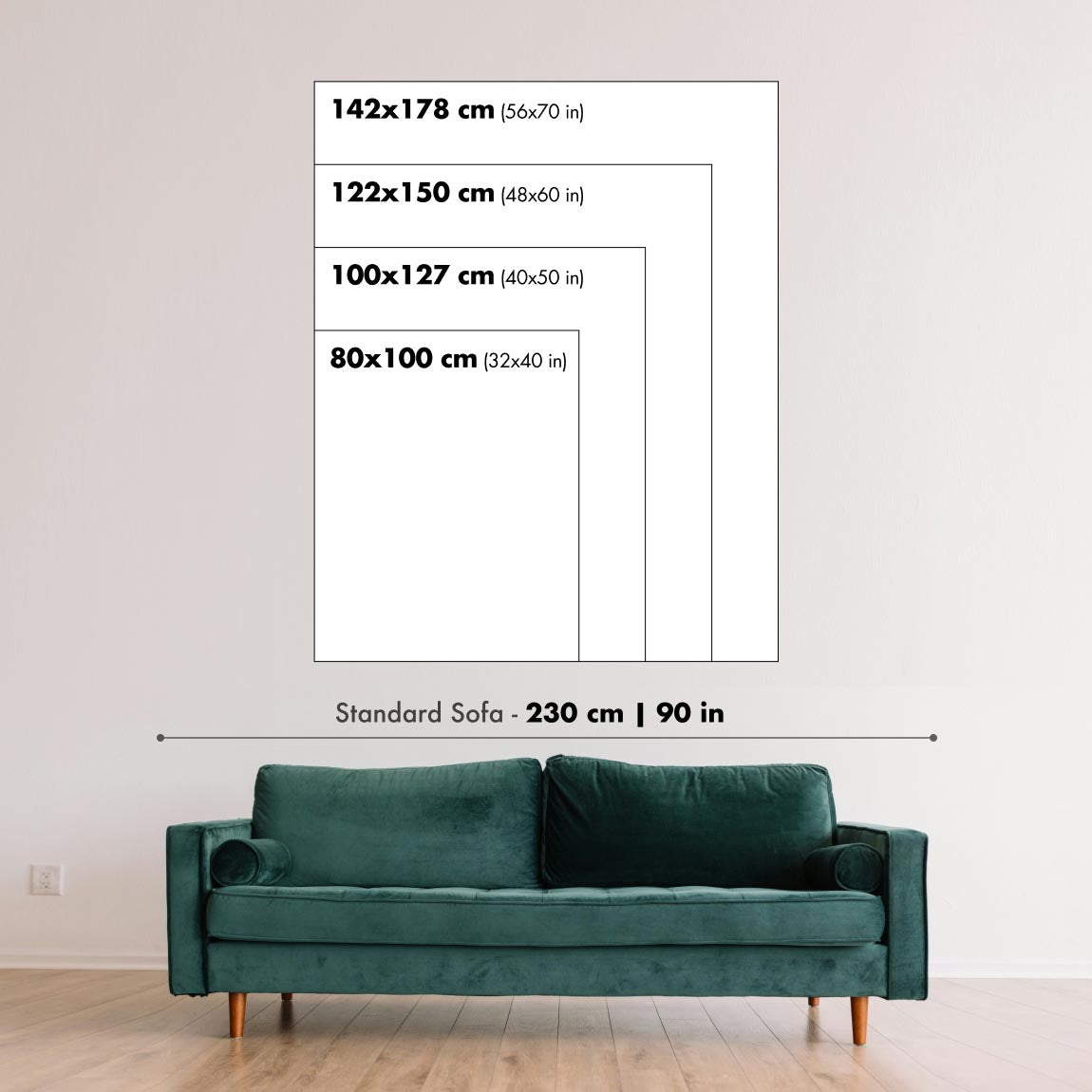
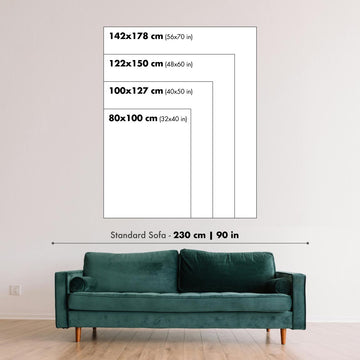
Artwork can feel intimate at smaller sizes and dramatically more architectural at larger ones. Use the room preview, model image and size guide to see how the proportions and scale will work in your space.
If you need an exact size, specialist framing or help planning a larger display, ask our workshop for advice.
The model in the listing images is holding the 18x24in (45x60cm) version of this art print.
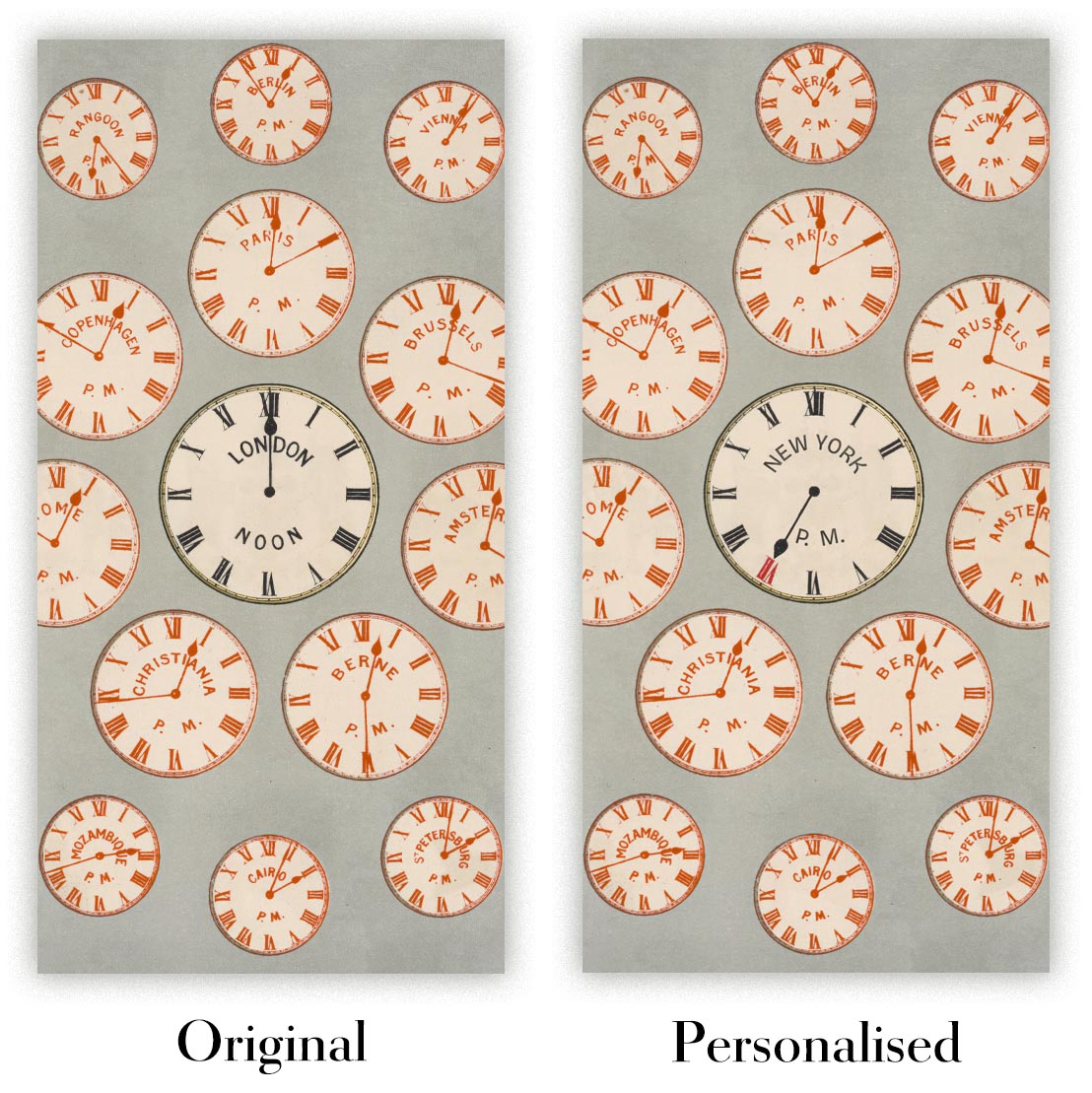
Where personalisation is available, you can add a short title or dedication, or one considered visual detail. See examples of personalised artwork.
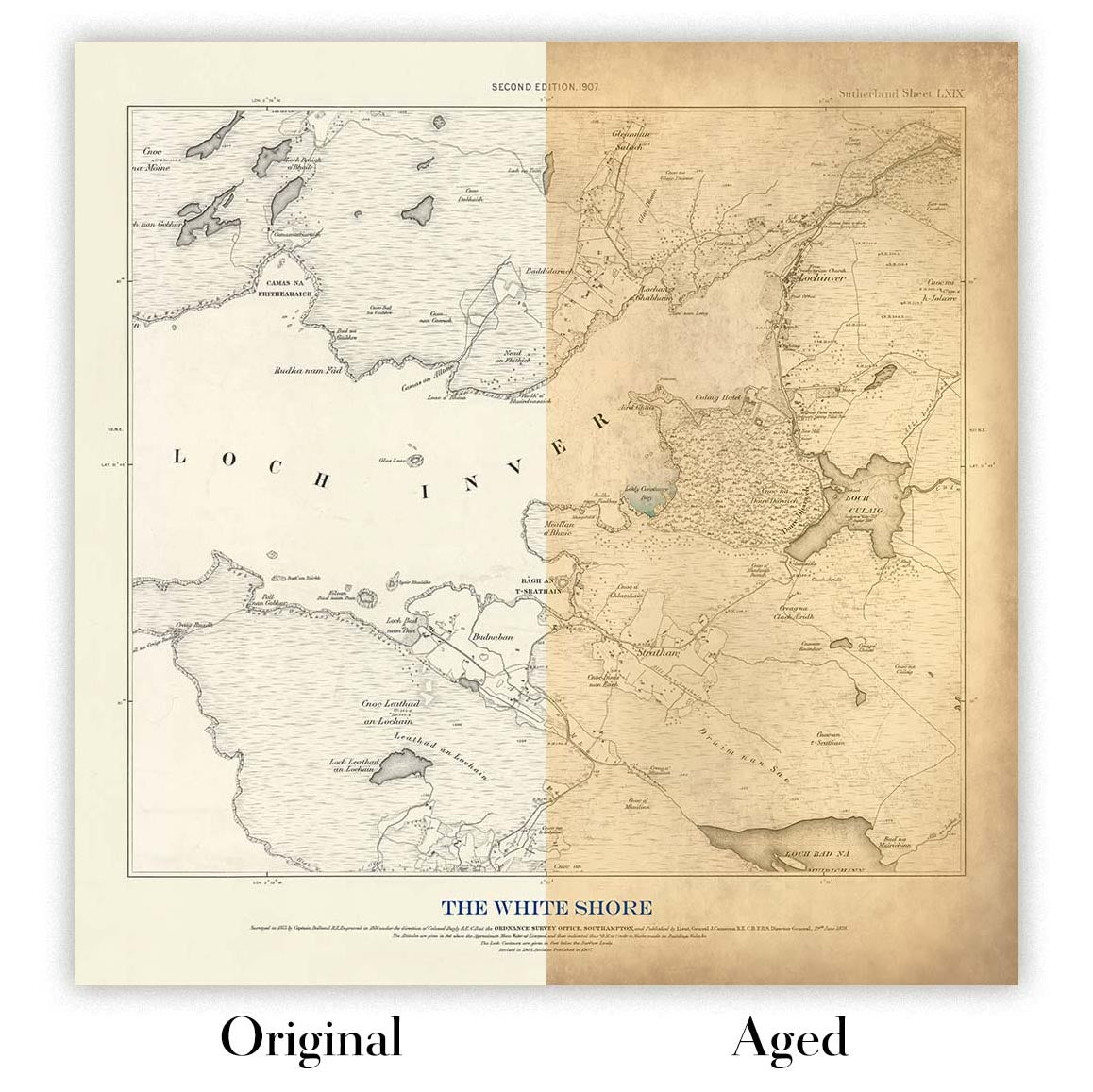
Choose Original to retain the colour and character of the source artwork, or Aged for a warmer, more antique appearance. See examples of our Aged artwork.
Every piece is produced to archival standards using fade-resistant pigment inks on acid-free matte art paper. Choose an art print, framed art print or framed canvas using the finish options above.
Framed art prints use crystal-clear optical acrylic for excellent clarity, lower weight and safer delivery than glass. Each piece arrives professionally framed and ready to hang.
Selected artworks can be produced at statement sizes up to 3 metres (10ft). Custom sizing and specialist framing are also available. If the exact option you need is not listed, contact our workshop.
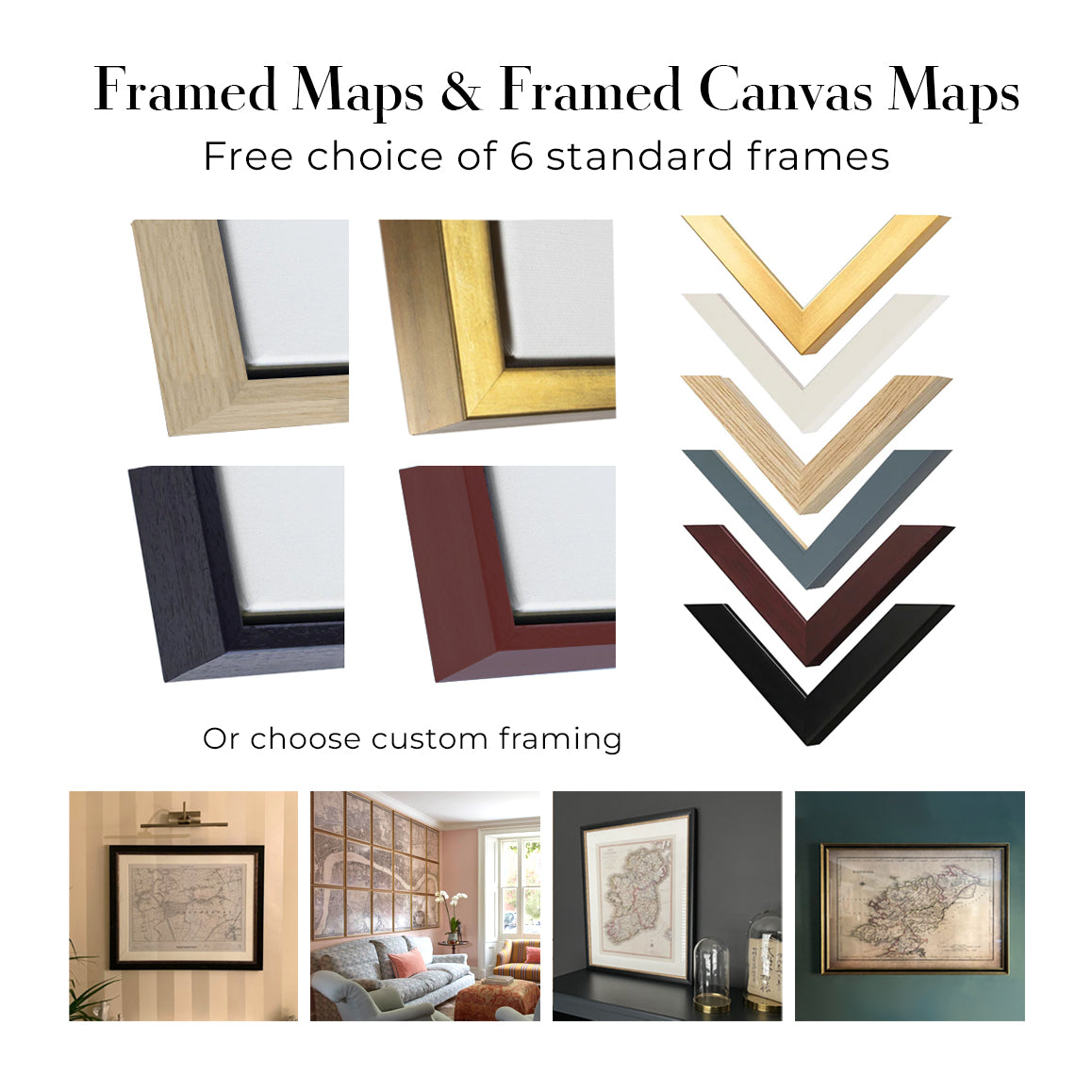
This artwork is also available as a float framed canvas, sometimes known as a shadow gap framed canvas or canvas floater. The work is printed on artist's cotton canvas and then stretched over a handmade box frame. We then "float" the canvas inside a wooden frame, which is available in a range of colours (black, dark brown, oak, antique gold and white). This is a wonderful way to present an art print without glazing in front. See some examples of float framed canvas art and explore the differences between my different finishes.
Pierre-Joseph Redouté’s La botanique de J. J. Rousseau, Plate 59, published in 1805, gathers an assortment of flowers and leaves into an airy, asymmetrical composition. Rather than presenting a single rooted specimen, Redouté distributes individual botanical forms across a pale ground: a deep blue bell-shaped flower occupies the centre right, a many-petalled yellow bloom opens below it, and smaller notes of purple, white and pink punctuate the surrounding space. The effect is both analytical and decorative, each element isolated for scrutiny yet carefully balanced within the page.
Redouté was among the most accomplished botanical illustrators of the late eighteenth and early nineteenth centuries, admired for reconciling scientific observation with exceptional compositional refinement. This plate was created for La botanique de J. J. Rousseau, published in 1805, and belongs to a period in which botanical imagery served several audiences at once: it assisted study and classification while also appealing to readers who valued the elegance of the natural world. Redouté’s particular achievement lay in making precision appear effortless; the structures of petals, veins and flower heads remain clear without losing their delicacy.
A closer look
The specimens seem almost to float, held apart by generous intervals of unmarked space. In the upper left, a compact purple cluster provides a dense, rounded counterweight to the more open flowers below. Near the upper centre, a tiny five-petalled white flower is rendered with minute dots at its heart. Its restrained colouring makes it easy to overlook at first, yet it plays an important part in the plate’s rhythm, bridging the stronger purple and blue accents.
At centre right, the blue bellflower is defined by a smooth contour and fine lines running along the petal edges. The yellow flower beneath it is fuller and more architectural: numerous narrow petals radiate from a central point, their overlapping layers creating an impression of volume despite the composition’s generally even lighting. A green leaf just below the centre introduces another kind of botanical information, its branching veins set out with the same attention given to the flowers’ more immediately appealing forms.
Further details reveal Redouté’s sensitivity to subtle variation. A slender pale-pink flower at centre left has gently curling edges, while the conical pink form at lower right deepens in colour towards its base, suggesting curvature through restrained tonal shading. These muted pinks, cool blue and purple, fresh green and warm yellow remain distinct without becoming strident. At the foot of the plate, the printed signature “P. J. Redouté” and the imprint “Imprimerie de Langlois” quietly anchor the otherwise weightless arrangement.
Context and significance
Botanical plates of this period occupied a productive territory between science and art. Clear separation of the specimens made comparison and close examination possible, while finely controlled linework and graduated colour gave plant structures a convincing presence. Redouté’s compositions helped establish a particularly graceful model for the genre: informative enough for botanical study, but never reduced to a merely diagrammatic record.
Plate 59 exemplifies that balance on an intimate scale. Its interest lies not in dramatic scenery but in acts of sustained looking—the texture of a purple flower head, the articulation of a leaf vein, or the slight change of tone at the base of a petal. The spacious arrangement allows each observation to retain its individuality while forming part of a measured, quietly animated whole.
Choosing the right size and finish
Artwork can feel intimate at smaller sizes and dramatically more architectural at larger ones. Use the room preview, model image and size guide to see how the proportions and scale will work in your space.
If you need an exact size, specialist framing or help planning a larger display, ask our workshop for advice.
The model in the listing images is holding the 18x24in (45x60cm) version of this art print.
Where personalisation is available, you can add a short title or dedication, or one considered visual detail. See examples of personalised artwork.
Choose Original to retain the colour and character of the source artwork, or Aged for a warmer, more antique appearance. See examples of our Aged artwork.
Every piece is produced to archival standards using fade-resistant pigment inks on acid-free matte art paper. Choose an art print, framed art print or framed canvas using the finish options above.
Framed art prints use crystal-clear optical acrylic for excellent clarity, lower weight and safer delivery than glass. Each piece arrives professionally framed and ready to hang.
Selected artworks can be produced at statement sizes up to 3 metres (10ft). Custom sizing and specialist framing are also available. If the exact option you need is not listed, contact our workshop.
This artwork is also available as a float framed canvas, sometimes known as a shadow gap framed canvas or canvas floater. The work is printed on artist's cotton canvas and then stretched over a handmade box frame. We then "float" the canvas inside a wooden frame, which is available in a range of colours (black, dark brown, oak, antique gold and white). This is a wonderful way to present an art print without glazing in front. See some examples of float framed canvas art and explore the differences between my different finishes.
Nombre de nos cartes et tirages d’art sont choisis comme cadeaux attentionnés pour des intérieurs, des bureaux, des cabinets de travail et des lieux chargés de sens.
Choisissez une option encadrée pour un cadeau prêt à être accroché en toute simplicité, ou optez pour un tirage non encadré si le destinataire préfère peut-être sélectionner son propre cadre.
Nous fabriquons les commandes localement dans 23 pays à travers le monde, afin que les cadeaux puissent souvent être produits à proximité du destinataire. Cela permet une livraison plus rapide, un transport plus sûr et d’éviter les surprises liées aux frais de douane ou droits d’importation.
- Nous pouvons livrer directement au destinataire
- Les pièces encadrées arrivent prêtes à être accrochées
- Les tirages non encadrés sont soigneusement emballés dans un tube de protection robuste
- Presque chaque commande est fabriquée localement, pour des cadeaux plus rapides et plus sûrs
- Les retours sous 90 jours laissent au destinataire le temps de se décider
Si vous hésitez sur le choix à faire, veuillez nous contacter. Nous pouvons vous aider à choisir la carte, le format, la finition ou l’option de livraison appropriés.
Pour la plupart des commandes, le délai de livraison est d'environ 3 jours ouvrables. Les produits personnalisés et sur mesure prennent plus de temps, car je dois faire la personnalisation et vous l'envoyer pour approbation, ce qui prend généralement 1 ou 2 jours.
Veuillez noter que les grandes commandes encadrées prennent généralement plus de temps à réaliser et à livrer.
Si vous avez besoin que votre commande arrive à une date précise, veuillez me contacter avant de passer votre commande afin que nous puissions trouver le meilleur moyen de nous assurer que vous receviez votre commande à temps.
J'imprime et encadre des cartes et des œuvres d'art dans 23 pays à travers le monde. Cela signifie que votre commande sera réalisée localement, ce qui réduit le temps de livraison et garantit qu'elle ne sera pas endommagée pendant le transport. Vous ne paierez jamais de droits de douane ou d'importation, et nous mettrons moins de CO2 dans l'air.
Toutes mes cartes et impressions artistiques sont bien emballées et envoyées dans un tube robuste si non encadrées, ou entourées de mousse si encadrées.
J'essaie d'envoyer toutes les commandes dans les 1 ou 2 jours suivant la réception de votre commande, bien que certains produits (comme les masques, les mugs et les sacs fourre-tout) puissent prendre plus de temps à réaliser.
Si vous choisissez Livraison Express lors du paiement, nous donnerons la priorité à votre commande et l'enverrons par un service de messagerie de 1 jour (Fedex, DHL, UPS, Parcelforce).
La livraison le lendemain est également disponible dans certains pays (États-Unis, Royaume-Uni, Singapour, Émirats Arabes Unis), mais veuillez essayer de commander tôt dans la journée afin que nous puissions l'envoyer à temps.
Lisez mon guide complet sur la livraison et la production locale
Mon cadre standard est un cadre en bois dur noir de style galerie. Il est simple et a un aspect assez moderne. Mon cadre standard mesure environ 20 mm (0,8 po) de large.
J'utilise de l'acrylique super clair (perspex/acrylite) pour le verre du cadre. C'est plus léger et plus sûr que le verre - et cela a meilleur aspect, car la réflexivité est plus faible.
Six couleurs de cadre standard sont disponibles gratuitement (noir, marron foncé, gris foncé, chêne, blanc et or antique). Des encadrements et montages/matelassages personnalisés sont disponibles si vous recherchez autre chose.
La plupart des cartes, œuvres d'art et illustrations sont également disponibles sous forme de toile encadrée. Nous utilisons une toile en coton mate (non brillante), que nous tendons sur un cadre en bois de boîte provenant de sources durables, puis nous 'flottions' la pièce à l'intérieur d'un cadre en bois. Le résultat final est assez beau, et il n'y a pas de vitrage qui gêne.
Tous les cadres sont fournis "prêts à accrocher", avec soit une corde, soit des supports à l'arrière. Les très grands cadres auront des plaques de suspension lourdes et/ou une latte de montage. Si vous avez des questions, veuillez nous contacter.
Voir quelques exemples de mes cartes encadrées et de cartes en toile encadrées.
Alternativement, je peux également fournir de vieilles cartes et œuvres d'art sur toile, sur panneau en mousse, en coton et d'autres matériaux.
Si vous souhaitez encadrer votre carte ou œuvre d'art vous-même, veuillez lire d'abord mon guide des tailles.
Nous travaillons avec des architectes d’intérieur, des établissements hôteliers, des professionnels de l’immobilier, des bureaux et des acheteurs d’entreprise, pour des pièces individuelles comme pour des projets coordonnés de plus grande envergure.
Cette œuvre peut être adaptée à un mur, une pièce ou un projet spécifique, et notre atelier peut vous aider à coordonner les dimensions, le matériau et l’encadrement avant la production.
- Dimensions exactes, grand format et sur mesure
- Encadrement, montage et matériaux alternatifs sur mesure
- Pièces coordonnées pour plusieurs pièces ou emplacements
- Personnalisation de l’œuvre, pour ajuster la couleur et le style de la pièce
- Conseils de notre atelier sur l’œuvre et l’encadrement
- Production locale pour des projets dans le monde entier
Échangez avec notre équipe Trade & Projects au sujet de cette pièce
Chaque impression artistique restaurée commence par l’œuvre originale de l’artiste — jamais par un substitut généré par IA.
Notre atelier de Londres travaille à partir de documents source soigneusement sélectionnés dans des musées, bibliothèques, archives et collections privées. Nous restaurons les dommages liés à l’âge, les couleurs passées et les défauts de reproduction, tout en préservant la composition, les coups de pinceau, le trait, la texture et le caractère d’époque de l’artiste.
Nous n’utilisons pas d’IA générative pour redessiner, réinterpréter ou inventer l’œuvre. La restauration numérique est utilisée uniquement pour récupérer et reproduire l’œuvre originale aussi fidèlement que possible.
Une fois restaurée, l’œuvre maîtresse est préparée dans le format et la finition que vous avez choisis. Votre pièce est ensuite imprimée et, le cas échéant, encadrée à proximité de sa destination de livraison.
Nos impressions d’art giclée utilisent un papier mat d’archivage sans acide de 200 g/m² et des encres pigmentaires résistantes à la décoloration pour une finition riche, digne d’un musée. Les impressions d’art encadrées utilisent un acrylique optique cristallin et arrivent prêtes à être accrochées.
Des toiles encadrées et des éditions spécialisées sur papier coton-rag sont également disponibles. En savoir plus sur nos matériaux et finitions.
Nous restaurons et produisons des cartes et des tirages d’art depuis 1984, et nous garantissons chaque pièce.
Chaque commande est couverte par notre garantie de 10 ans et notre garantie de livraison sans dommage. Si votre pièce arrive endommagée, nous la remplacerons ou la referons gratuitement. Si quoi que ce soit d’autre ne vous donne pas entière satisfaction, contactez notre équipe d’atelier et nous y remédierons rapidement.
Consultez notre politique de retours et de remboursement pour plus de détails.


