












Antiguo mapa jesuita de Paraguay de Fritz, 1733: Asunción, Encarnación, Iguazú, río Paraná, río Paraguay
Restaurado en nuestro taller de Londres a partir del mapa original de 1733 e impreso en calidad museo. Descripción completa
La oferta del coleccionista
Elija dos obras elegibles y obtenga un 20 % de descuento en ambas. Elija tres y la de menor precio será gratuita, con un ahorro máximo del 33 %.
Combine y mezcle mapas estándar elegibles y reproducciones de bellas artes. No se requiere código; la oferta se aplica automáticamente al finalizar la compra.
Se incluyen las configuraciones estándar hechas por encargo. Quedan excluidos los tamaños a medida, los diseños personalizados y los trabajos por encargo.
¿Necesita entrega en diferentes direcciones? Contáctenos antes de realizar el pedido.La oferta del coleccionista
Elija dos obras elegibles y obtenga un 20 % de descuento en ambas. Elija tres y la de menor precio será gratuita, con un ahorro máximo del 33 %.
Combine y mezcle mapas estándar elegibles y reproducciones de bellas artes. No se requiere código; la oferta se aplica automáticamente al finalizar la compra.
Se incluyen las configuraciones estándar hechas por encargo. Quedan excluidos los tamaños a medida, los diseños personalizados y los trabajos por encargo.
¿Necesita entrega en diferentes direcciones? Contáctenos antes de realizar el pedido. Restaurado en Londres • Impreso y enmarcado en the UK
Restaurado a partir del mapa original de 1733 e impreso en calidad museo. Descripción completa
Elige el formato
Elige el acabado


(Más información)
Mensaje de regalo y acabado personalizado

Si deseas agregar un mensaje de regalo, o un acabado (rompecabezas, tablero de aluminio, etc.) que no esté disponible aquí, por favor solicítalo en la "nota del pedido" cuando realices la compra.
Cada pedido es hecho a medida, así que si necesitas que el tamaño se ajuste ligeramente, o que se imprima en un material inusual, háznoslo saber. Hemos realizado miles de pedidos personalizados a lo largo de los años, así que hay (casi) nada que no podamos gestionar.
También puedes contactarnos antes de hacer tu pedido, ¡si lo prefieres!
Llévate a casa un pedazo de historia
Más de 8.000 reseñas de 5 estrellas

Le Paraguay ou les RR. PP de la Compagnie de Jesus ont repandu leurs Missions . . . 1733 presenta la visión...
Seguir leyendoLe Paraguay ou les RR. PP de la Compagnie de Jesus ont repandu leurs Missions . . . 1733 presenta la visión penetrante de Samuel Fritz del mundo jesuita en el corazón de América del Sur. Compuesto en el apogeo del empeño misionero, el mapa se centra en los corredores fluviales y los campos de misión de Paraguay y del Brasil adyacente, donde la Compañía de Jesús orquestó una ambiciosa red de asentamientos y evangelización. Un suntuoso cartucho en la parte superior derecha proclama el título y la autoría, equilibrando con su exuberancia barroca la sobria precisión geográfica del mapa. Una rosa de los vientos finamente trazada establece la orientación, mientras toponimios cuidadosamente dispuestos y hilos fluviales despliegan un paisaje a la vez espiritual y estratégico: un atlas de fe y frontera que guiaba el viaje, el gobierno y la conversión a lo largo de las vías fluviales del Paraná y del Paraguay.
La obra de Fritz constituye una actualización meditada de la rara delineación de 1726 de las Provincias Jesuitas de Juan Francisco D'Avila, incorporando nuevas observaciones de campo para afinar la hidrografía, la toponimia y las rutas. Los nombres de los asentamientos, distintivamente en cursiva, marcan la huella misionera y distinguen las poblaciones mayores y los sitios de reducción de los puestos menores. Los ríos Paraná y Paraguay, líneas vitales del movimiento, aparecen con afluentes y recodos registrados a partir de la experiencia vivida, enriquecidos por anotaciones que aclaran la navegación y las condiciones locales. Las cordilleras y colinas se representan con un esmerado trazado de líneas de contorno, una indicación táctil de los cambios de elevación que importaban para los porteos y la defensa. El resultado es una cartografía humana: técnica pero inmediata, arraigada en los informes de padres que sondeaban canales, contaban leguas y cartografiaban almas tanto como costas.
En todo este lienzo, Asunción ancla el orden provincial español, sede del gobernador y nudo de abastecimiento que alimenta las misiones río arriba y el comercio. Hacia el sur, la región de Encarnación —desde hace mucho un punto de articulación entre río y reducción— se agrupa a lo largo del Paraná, emblemática de la densidad y la resiliencia del proyecto jesuita. Hacia el este, la estratégicamente cargada confluencia cerca de la actual Ciudad del Este emerge como un cruce decisivo en el acceso al Iguazú, un umbral entre los corazones guaraníes y las marchas boscosas. El trazado de Fritz entrelaza estos espacios en un itinerario coherente, mostrando cómo la catequesis, la agricultura y la producción artesanal irradiaban desde las misiones enlazadas por canoas y caravanas estacionales, una red cuya fortaleza residía en la movilidad por agua y la lengua compartida.
El mapa también se lee como un registro del conflicto imperial. Al este, Curitiba señala la esfera portuguesa que avanza tierra adentro desde la vertiente atlántica, más allá de las hileras de colinas de la Serra do Mar. Hacia el oeste y el sur, las jurisdicciones españolas —y la tutela jesuita de las comunidades guaraníes— afrontan las presiones de las incursiones bandeirantes y las ambiguas líneas de tratado heredadas de Tordesillas. Esta geografía de reclamos y cruces resonó en Europa: Jean-Baptiste Bourguignon d’Anville sintetizaría más tarde el conocimiento sudamericano a partir de muchas fuentes, citando expresamente mapas recientes de los misioneros del Paraguay. La representación de Fritz pertenece a esa cadena de inteligencia —testimonios locales depurados en ciencia continental— en la que diarios de misión, registros fluviales y debates fronterizos convergen en la hoja impresa.
Desde el punto de vista estilístico, la pieza une devoción y empirismo. El cartucho ornamental, emblema de estatus y autoridad, enmarca una obra animada por ayudas prácticas: una rosa de los vientos nítida para el rumbo, letras en cursiva para jerarquizar los lugares y notas marginales que aclaran vados, rápidos y particularidades regionales. La representación del relieve, casi en forma de curvas de nivel, confiere profundidad táctil a las rutas que se entrecruzan de reducción en reducción, mientras que el Paraná y el Paraguay, amplios y seguros, guían la mirada como guiaban las canoas. Como artefacto histórico, condensa la ambición jesuítica de cartografiar tanto como de convertir —transformando un vasto interior alimentado por ríos en un espacio legible— y preserva el momento en que el interior de Sudamérica pasó del rumor a una geografía razonada e informada por los misioneros.
Ciudades y pueblos en este mapa
- Asunción — Población actual: ~500,000
- Encarnación — Población actual: ~100,000
- Ciudad del Este — Población actual: ~300,000
- Curitiba — Población actual: ~1,900,000
Características destacadas & puntos de referencia
- Cartucho: Diseño muy ornamentado en la parte superior derecha, que indica el título y el autor del mapa.
- Ríos: Ríos claramente marcados, como el Paraná y el Paraguay, que muestran su papel vital en la navegación y el comercio.
- Topografía: Las cadenas montañosas y colinas se ilustran con líneas de contorno, demostrando los cambios de elevación en el paisaje.
- Nombres de asentamientos: Diversos asentamientos identificados con etiquetas en cursiva, por lo general pueblos más grandes o emplazamientos de misión.
- Anotaciones: Notas adicionales proporcionadas para la navegación o para explicar rasgos geográficos.
- Direcciones: Rosa de los vientos que indica la orientación, útil para comprender la disposición del mapa.
Contexto histórico y de diseño
- Nombre del mapa: Le Paraguay ou les RR. PP de la Compagnie de Jesus ont repandu leurs Missions . . . 1733
- Creado por: Samuel Fritz en 1733
- Descripción: Mapa detallado de las regiones jesuíticas de Sudamérica, basado en observaciones de misioneros jesuitas.
- Contexto de creación: Una actualización del raro mapa de Juan Francisco D'Avila de las Provincias Jesuitas de 1726, con detalles mejorados.
- Referencia histórica: Vinculado al trabajo de D'anville, quien creó un mapa basado en diversas fuentes, incluidos mapas recientes de misioneros de Paraguay.
- Temas representados: Enfoque en las misiones jesuíticas, los asentamientos y los rasgos geográficos de Paraguay.
- Alcance geográfico: El mapa abarca predominantemente regiones que forman parte del Paraguay actual, porciones de Brasil y cualquier área circundante influida o cartografiada por las misiones jesuíticas.
- Contexto de diseño/estilo: El cartógrafo empleó un cartucho ornamentado, mostrando elementos artísticos típicos de la época e indicando la importancia del mapa.
- Importancia histórica: Refleja los esfuerzos jesuíticos por difundir el cristianismo y su impacto en Sudamérica, además de servir como referencia geográfica para la labor misionera.
Por favor, revise bien las imágenes para asegurarse de que una ciudad o lugar específico aparece en este mapa. También puede ponerse en contacto con nosotros y pedirnos que revisemos el mapa por usted.
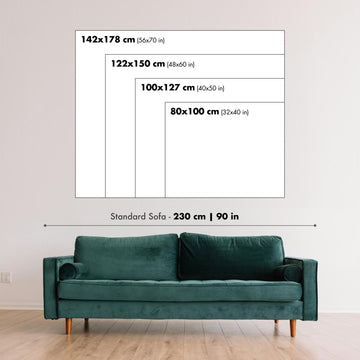
Este mapa luce magnífico en cualquier tamaño, pero siempre recomiendo optar por un tamaño mayor si dispone de espacio. Así podrá apreciar fácilmente todos los detalles.
Este mapa luce increíble en tamaños de hasta 50in (125cm). Si busca un mapa más grande, por favor póngase en contacto.
La persona que aparece en las imágenes del anuncio sostiene la versión de 16x16in (40x40cm) de este mapa.
La quinta imagen del anuncio muestra un ejemplo de mi servicio de personalización de mapas.
Si busca algo ligeramente diferente, consulte mi colección de los mejores mapas antiguos para ver si algo más le llama la atención.
Por favor, contácteme para comprobar si una determinada ubicación, punto de referencia o elemento aparece en este mapa.
Sería un maravilloso regalo de cumpleaños, Navidad, Día del Padre, despedida de trabajo, aniversario o inauguración de casa para alguien de las zonas cubiertas por este mapa.
Este mapa está disponible como impresión giclée en papel mate de archivo libre de ácido, o puede adquirirlo enmarcado. El marco es un bonito y sencillo marco negro que se adapta a la mayoría de estilos decorativos. Póngase en contacto si desea un color o material de marco diferente. Mis marcos llevan un acristalamiento de acrílico de calidad museística ultratransparente (perspex/acrylite), que es considerablemente menos reflectante que el vidrio, más seguro y siempre llegará en perfectas condiciones.
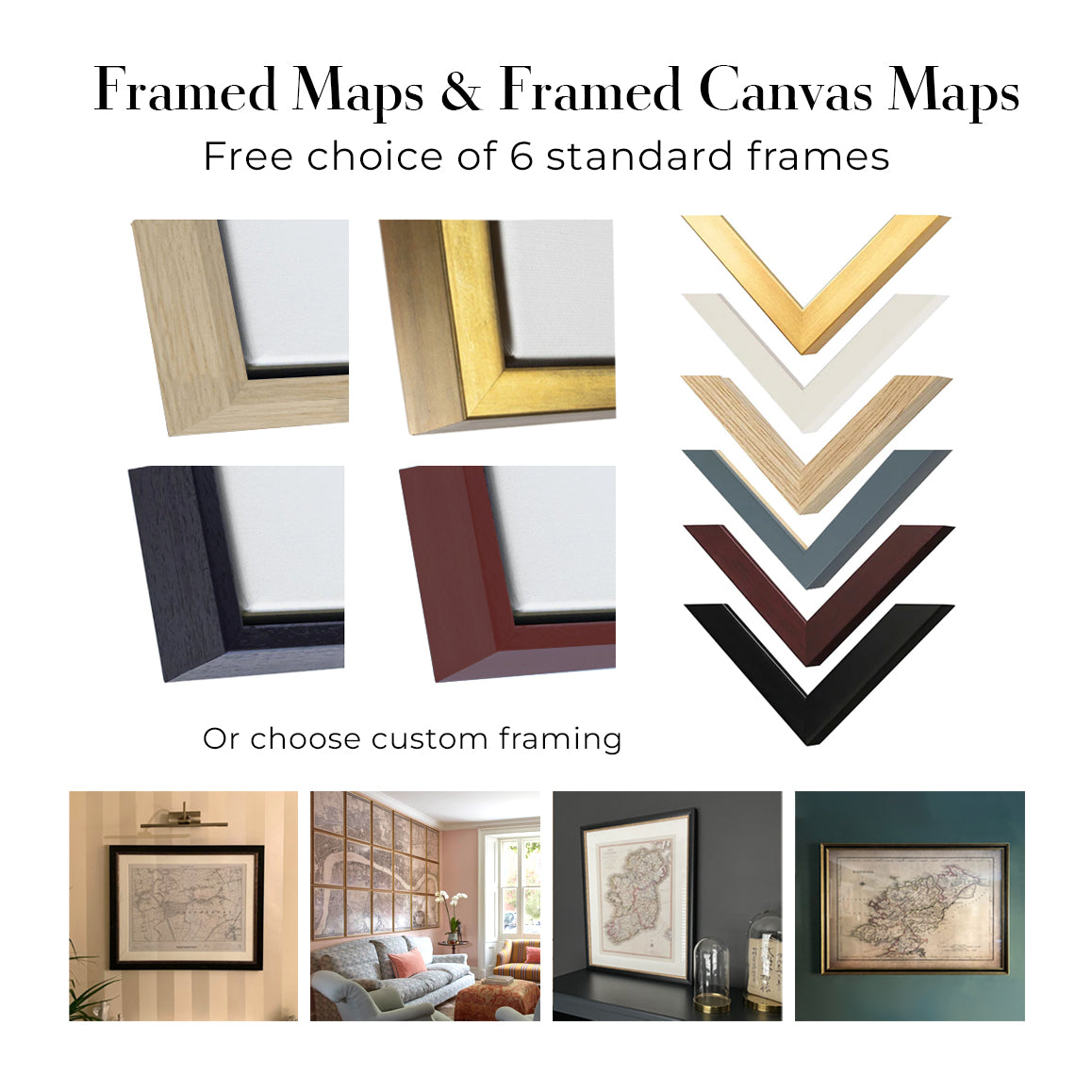
This map is also available as a float framed canvas, sometimes known as a shadow gap framed canvas or canvas floater. The map is printed on artist's cotton canvas and then stretched over a handmade box frame. We then "float" the canvas inside a wooden frame, which is available in a range of colours (black, dark brown, oak, antique gold and white). This is a wonderful way to present a map without glazing in front. See some examples of float framed canvas maps and explore the differences between my different finishes.
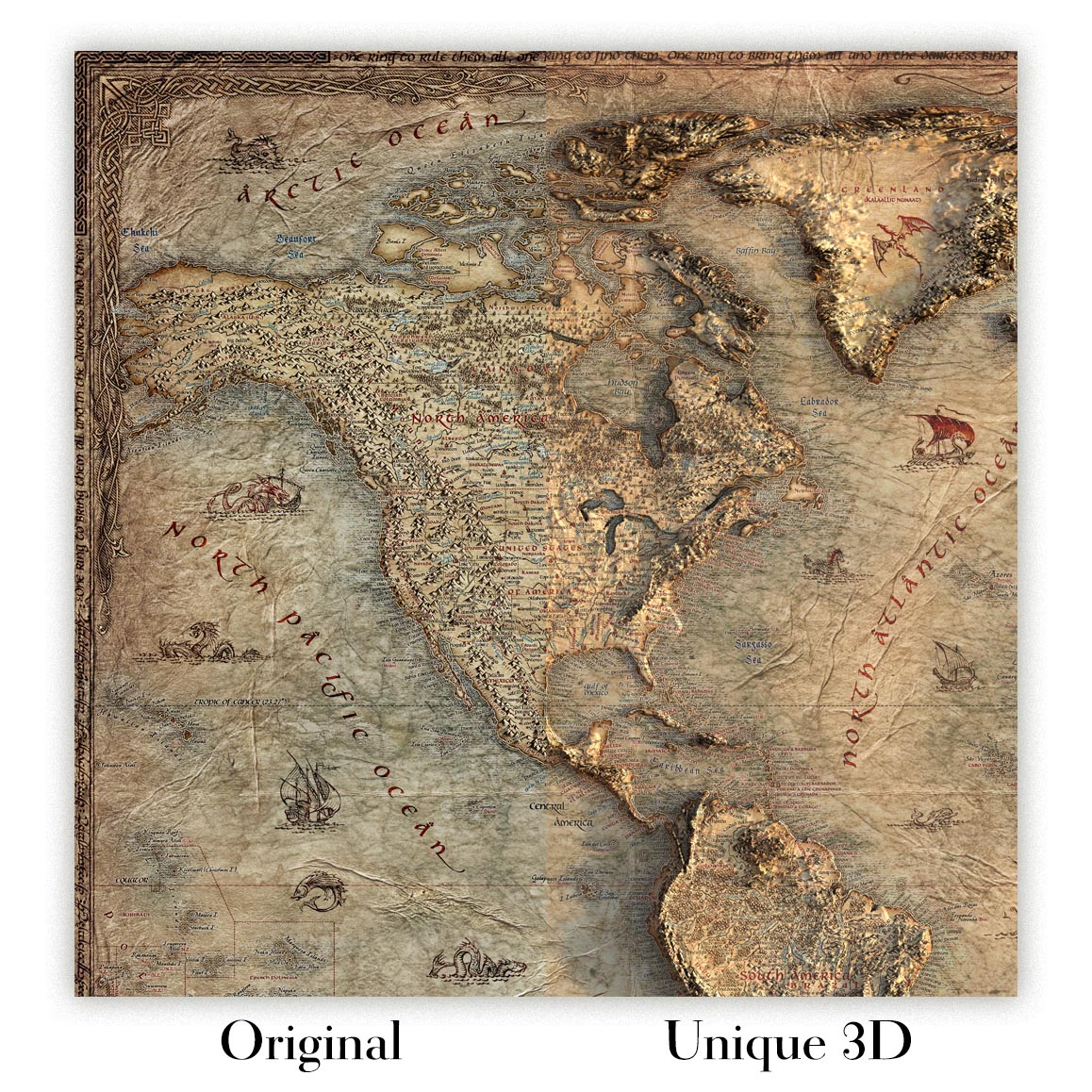
For something truly unique, this map is also available in "Unique 3D", our trademarked process that dramatically transforms the map so that it has a wonderful sense of depth. We combine the original map with detailed topography and elevation data, so that mountains and the terrain really "pop". For more info and examples of 3D maps, check my Unique 3D page.
Le Paraguay ou les RR. PP de la Compagnie de Jesus ont repandu leurs Missions . . . 1733 presenta la visión penetrante de Samuel Fritz del mundo jesuita en el corazón de América del Sur. Compuesto en el apogeo del empeño misionero, el mapa se centra en los corredores fluviales y los campos de misión de Paraguay y del Brasil adyacente, donde la Compañía de Jesús orquestó una ambiciosa red de asentamientos y evangelización. Un suntuoso cartucho en la parte superior derecha proclama el título y la autoría, equilibrando con su exuberancia barroca la sobria precisión geográfica del mapa. Una rosa de los vientos finamente trazada establece la orientación, mientras toponimios cuidadosamente dispuestos y hilos fluviales despliegan un paisaje a la vez espiritual y estratégico: un atlas de fe y frontera que guiaba el viaje, el gobierno y la conversión a lo largo de las vías fluviales del Paraná y del Paraguay.
La obra de Fritz constituye una actualización meditada de la rara delineación de 1726 de las Provincias Jesuitas de Juan Francisco D'Avila, incorporando nuevas observaciones de campo para afinar la hidrografía, la toponimia y las rutas. Los nombres de los asentamientos, distintivamente en cursiva, marcan la huella misionera y distinguen las poblaciones mayores y los sitios de reducción de los puestos menores. Los ríos Paraná y Paraguay, líneas vitales del movimiento, aparecen con afluentes y recodos registrados a partir de la experiencia vivida, enriquecidos por anotaciones que aclaran la navegación y las condiciones locales. Las cordilleras y colinas se representan con un esmerado trazado de líneas de contorno, una indicación táctil de los cambios de elevación que importaban para los porteos y la defensa. El resultado es una cartografía humana: técnica pero inmediata, arraigada en los informes de padres que sondeaban canales, contaban leguas y cartografiaban almas tanto como costas.
En todo este lienzo, Asunción ancla el orden provincial español, sede del gobernador y nudo de abastecimiento que alimenta las misiones río arriba y el comercio. Hacia el sur, la región de Encarnación —desde hace mucho un punto de articulación entre río y reducción— se agrupa a lo largo del Paraná, emblemática de la densidad y la resiliencia del proyecto jesuita. Hacia el este, la estratégicamente cargada confluencia cerca de la actual Ciudad del Este emerge como un cruce decisivo en el acceso al Iguazú, un umbral entre los corazones guaraníes y las marchas boscosas. El trazado de Fritz entrelaza estos espacios en un itinerario coherente, mostrando cómo la catequesis, la agricultura y la producción artesanal irradiaban desde las misiones enlazadas por canoas y caravanas estacionales, una red cuya fortaleza residía en la movilidad por agua y la lengua compartida.
El mapa también se lee como un registro del conflicto imperial. Al este, Curitiba señala la esfera portuguesa que avanza tierra adentro desde la vertiente atlántica, más allá de las hileras de colinas de la Serra do Mar. Hacia el oeste y el sur, las jurisdicciones españolas —y la tutela jesuita de las comunidades guaraníes— afrontan las presiones de las incursiones bandeirantes y las ambiguas líneas de tratado heredadas de Tordesillas. Esta geografía de reclamos y cruces resonó en Europa: Jean-Baptiste Bourguignon d’Anville sintetizaría más tarde el conocimiento sudamericano a partir de muchas fuentes, citando expresamente mapas recientes de los misioneros del Paraguay. La representación de Fritz pertenece a esa cadena de inteligencia —testimonios locales depurados en ciencia continental— en la que diarios de misión, registros fluviales y debates fronterizos convergen en la hoja impresa.
Desde el punto de vista estilístico, la pieza une devoción y empirismo. El cartucho ornamental, emblema de estatus y autoridad, enmarca una obra animada por ayudas prácticas: una rosa de los vientos nítida para el rumbo, letras en cursiva para jerarquizar los lugares y notas marginales que aclaran vados, rápidos y particularidades regionales. La representación del relieve, casi en forma de curvas de nivel, confiere profundidad táctil a las rutas que se entrecruzan de reducción en reducción, mientras que el Paraná y el Paraguay, amplios y seguros, guían la mirada como guiaban las canoas. Como artefacto histórico, condensa la ambición jesuítica de cartografiar tanto como de convertir —transformando un vasto interior alimentado por ríos en un espacio legible— y preserva el momento en que el interior de Sudamérica pasó del rumor a una geografía razonada e informada por los misioneros.
Ciudades y pueblos en este mapa
- Asunción — Población actual: ~500,000
- Encarnación — Población actual: ~100,000
- Ciudad del Este — Población actual: ~300,000
- Curitiba — Población actual: ~1,900,000
Características destacadas & puntos de referencia
- Cartucho: Diseño muy ornamentado en la parte superior derecha, que indica el título y el autor del mapa.
- Ríos: Ríos claramente marcados, como el Paraná y el Paraguay, que muestran su papel vital en la navegación y el comercio.
- Topografía: Las cadenas montañosas y colinas se ilustran con líneas de contorno, demostrando los cambios de elevación en el paisaje.
- Nombres de asentamientos: Diversos asentamientos identificados con etiquetas en cursiva, por lo general pueblos más grandes o emplazamientos de misión.
- Anotaciones: Notas adicionales proporcionadas para la navegación o para explicar rasgos geográficos.
- Direcciones: Rosa de los vientos que indica la orientación, útil para comprender la disposición del mapa.
Contexto histórico y de diseño
- Nombre del mapa: Le Paraguay ou les RR. PP de la Compagnie de Jesus ont repandu leurs Missions . . . 1733
- Creado por: Samuel Fritz en 1733
- Descripción: Mapa detallado de las regiones jesuíticas de Sudamérica, basado en observaciones de misioneros jesuitas.
- Contexto de creación: Una actualización del raro mapa de Juan Francisco D'Avila de las Provincias Jesuitas de 1726, con detalles mejorados.
- Referencia histórica: Vinculado al trabajo de D'anville, quien creó un mapa basado en diversas fuentes, incluidos mapas recientes de misioneros de Paraguay.
- Temas representados: Enfoque en las misiones jesuíticas, los asentamientos y los rasgos geográficos de Paraguay.
- Alcance geográfico: El mapa abarca predominantemente regiones que forman parte del Paraguay actual, porciones de Brasil y cualquier área circundante influida o cartografiada por las misiones jesuíticas.
- Contexto de diseño/estilo: El cartógrafo empleó un cartucho ornamentado, mostrando elementos artísticos típicos de la época e indicando la importancia del mapa.
- Importancia histórica: Refleja los esfuerzos jesuíticos por difundir el cristianismo y su impacto en Sudamérica, además de servir como referencia geográfica para la labor misionera.
Por favor, revise bien las imágenes para asegurarse de que una ciudad o lugar específico aparece en este mapa. También puede ponerse en contacto con nosotros y pedirnos que revisemos el mapa por usted.
Este mapa luce magnífico en cualquier tamaño, pero siempre recomiendo optar por un tamaño mayor si dispone de espacio. Así podrá apreciar fácilmente todos los detalles.
Este mapa luce increíble en tamaños de hasta 50in (125cm). Si busca un mapa más grande, por favor póngase en contacto.
La persona que aparece en las imágenes del anuncio sostiene la versión de 16x16in (40x40cm) de este mapa.
La quinta imagen del anuncio muestra un ejemplo de mi servicio de personalización de mapas.
Si busca algo ligeramente diferente, consulte mi colección de los mejores mapas antiguos para ver si algo más le llama la atención.
Por favor, contácteme para comprobar si una determinada ubicación, punto de referencia o elemento aparece en este mapa.
Sería un maravilloso regalo de cumpleaños, Navidad, Día del Padre, despedida de trabajo, aniversario o inauguración de casa para alguien de las zonas cubiertas por este mapa.
Este mapa está disponible como impresión giclée en papel mate de archivo libre de ácido, o puede adquirirlo enmarcado. El marco es un bonito y sencillo marco negro que se adapta a la mayoría de estilos decorativos. Póngase en contacto si desea un color o material de marco diferente. Mis marcos llevan un acristalamiento de acrílico de calidad museística ultratransparente (perspex/acrylite), que es considerablemente menos reflectante que el vidrio, más seguro y siempre llegará en perfectas condiciones.
This map is also available as a float framed canvas, sometimes known as a shadow gap framed canvas or canvas floater. The map is printed on artist's cotton canvas and then stretched over a handmade box frame. We then "float" the canvas inside a wooden frame, which is available in a range of colours (black, dark brown, oak, antique gold and white). This is a wonderful way to present a map without glazing in front. See some examples of float framed canvas maps and explore the differences between my different finishes.
For something truly unique, this map is also available in "Unique 3D", our trademarked process that dramatically transforms the map so that it has a wonderful sense of depth. We combine the original map with detailed topography and elevation data, so that mountains and the terrain really "pop". For more info and examples of 3D maps, check my Unique 3D page.
Muchos de nuestros mapas y reproducciones de arte se eligen como regalos considerados para hogares, oficinas, despachos y lugares significativos.
Elija una opción enmarcada para el regalo más sencillo, listo para colgar, o elija una lámina sin enmarcar si el destinatario prefiere seleccionar su propio marco.
Producimos los pedidos localmente en 23 países de todo el mundo, por lo que a menudo los regalos pueden realizarse cerca del destinatario. Esto ayuda a que lleguen más rápido, viajen de forma más segura y eviten sorpresas por aduanas o aranceles de importación.
- Podemos entregar directamente al destinatario
- Las piezas enmarcadas llegan listas para colgar
- Las láminas sin enmarcar se embalan cuidadosamente en un resistente tubo protector
- Casi todos los pedidos se producen localmente, para regalar de forma más rápida y segura
- Las devoluciones de 90 días dan al destinatario tiempo para decidir
Si no está seguro de qué elegir, por favor contáctenos. Podemos ayudarle a escoger el mapa, tamaño, acabado u opción de entrega adecuados.
Para la mayoría de los pedidos, el tiempo de entrega es de aproximadamente 3 días laborables. Los productos personalizados y a medida tardan más, ya que tengo que hacer la personalización y enviártelo para su aprobación, lo cual suele tardar 1 o 2 días.
Tenga en cuenta que los pedidos enmarcados muy grandes suelen tardar más en fabricarse y entregarse.
Si necesitas que tu pedido llegue para una fecha determinada, por favor contáctame antes de hacer el pedido para que podamos encontrar la mejor manera de asegurarnos de que recibas tu pedido a tiempo.
Imprimo y enmarco mapas y obras de arte en 23 países alrededor del mundo. Esto significa que tu pedido se fabricará localmente, lo que reduce el tiempo de entrega y asegura que no se dañe durante el envío. Nunca pagarás aranceles de aduana o impuestos de importación, y pondremos menos CO2 en el aire.
Todos mis mapas y impresiones artísticas están bien empaquetados y enviados en un tubo resistente si no están enmarcados, o rodeados de espuma si están enmarcados.
Intento enviar todos los pedidos dentro de 1 o 2 días después de recibir tu pedido, aunque algunos productos (como mascarillas, tazas y bolsas de tela) pueden tardar más en fabricarse.
Si seleccionas Entrega Exprés al finalizar la compra, priorizaremos tu pedido y lo enviaremos por mensajería de 1 día (Fedex, DHL, UPS, Parcelforce).
La entrega al día siguiente también está disponible en algunos países (EE. UU., Reino Unido, Singapur, EAU), pero por favor intenta hacer tu pedido temprano en el día para que podamos enviarlo a tiempo.
Mi marco estándar es un marco de madera de fresno negro estilo galería. Es simple y tiene un aspecto bastante moderno. Mi marco estándar tiene alrededor de 20 mm (0.8 in) de ancho.
Utilizo acrílico super claro (perspex/acrylite) para el vidrio del marco. Es más ligero y seguro que el vidrio, y se ve mejor, ya que la reflectividad es menor.
Seis colores de marco estándar están disponibles de forma gratuita (negro, marrón oscuro, gris oscuro, roble, blanco y oro antiguo).El enmarcado y montaje/matizado personalizado está disponible si buscas algo diferente.
La mayoría de los mapas, arte e ilustraciones también están disponibles como un lienzo enmarcado. Utilizamos lienzo de algodón mate (no brillante), lo estiramos sobre un marco de madera de caja de origen sostenible, y luego 'flotamos' la pieza dentro de un marco de madera. El resultado final es bastante hermoso, y no hay cristal que se interponga.
Todos los marcos se proporcionan "listos para colgar", con una cuerda o soportes en la parte posterior. Los marcos muy grandes tendrán placas de colgar de alta resistencia y/o un listón de montaje. Si tienes alguna pregunta, por favor ponte en contacto.
Mira algunos ejemplos de mis mapas enmarcados y mapas en lienzo enmarcados.
Alternativamente, también puedo proporcionar mapas antiguos y obras de arte en lienzo, tablero de espuma, papel de algodón y otros materiales.
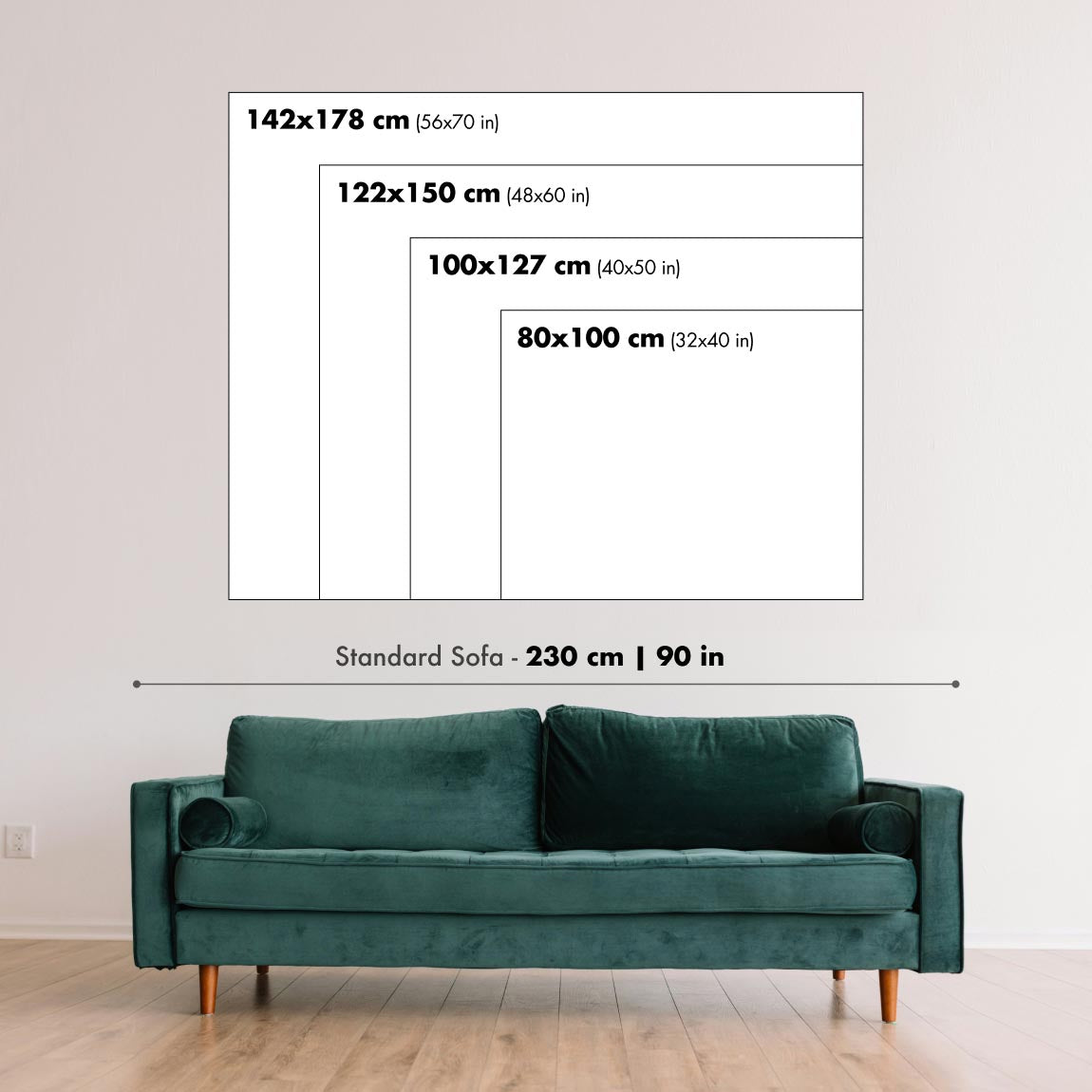
Si deseas enmarcar tu mapa o obra de arte tú mismo, por favor lee mi guía de tamaños primero.
Trabajamos con diseñadores de interiores, negocios de hostelería, profesionales del sector inmobiliario, oficinas y compradores corporativos tanto en piezas individuales como en proyectos coordinados de mayor envergadura.
Este mapa puede adaptarse a una pared, estancia o proyecto concretos, y nuestro taller puede ayudar a coordinar las dimensiones, el material y el enmarcado antes de la producción.
- Dimensiones exactas, de gran formato y a medida
- Enmarcado, montaje y materiales alternativos personalizados
- Piezas coordinadas para varias habitaciones o ubicaciones
- Personalización del mapa para señalar ubicaciones importantes o añadir detalles adicionales
- Asesoramiento sobre el mapa y el enmarcado por parte de nuestro taller
- Producción local para proyectos en todo el mundo
Mis mapas son reproducciones de mapas originales de altísima calidad.
Obtengo mapas originales y raros de bibliotecas, casas de subastas y colecciones privadas de todo el mundo, los restauro en mi taller de Londres y luego uso tintas e impresoras giclée especializadas para crear hermosos mapas que lucen incluso mejor que el original.
Mis mapas están impresos en papel de archivo mate (no brillante) sin ácido que se siente de muy alta calidad y casi como una tarjeta. En términos técnicos, el peso/grosor del papel es de 10 mil/200 g/m². Es perfecto para enmarcar.
Imprimo con tintas pigmentadas Epson ultrachrome giclée UV resistentes a la decoloración, algunas de las mejores tintas que puedes encontrar.
yo también puedo hacer mapas sobre lienzo, trapo de algodón y otros materiales exóticos.
Obtenga más información sobre The Unique Maps Co..
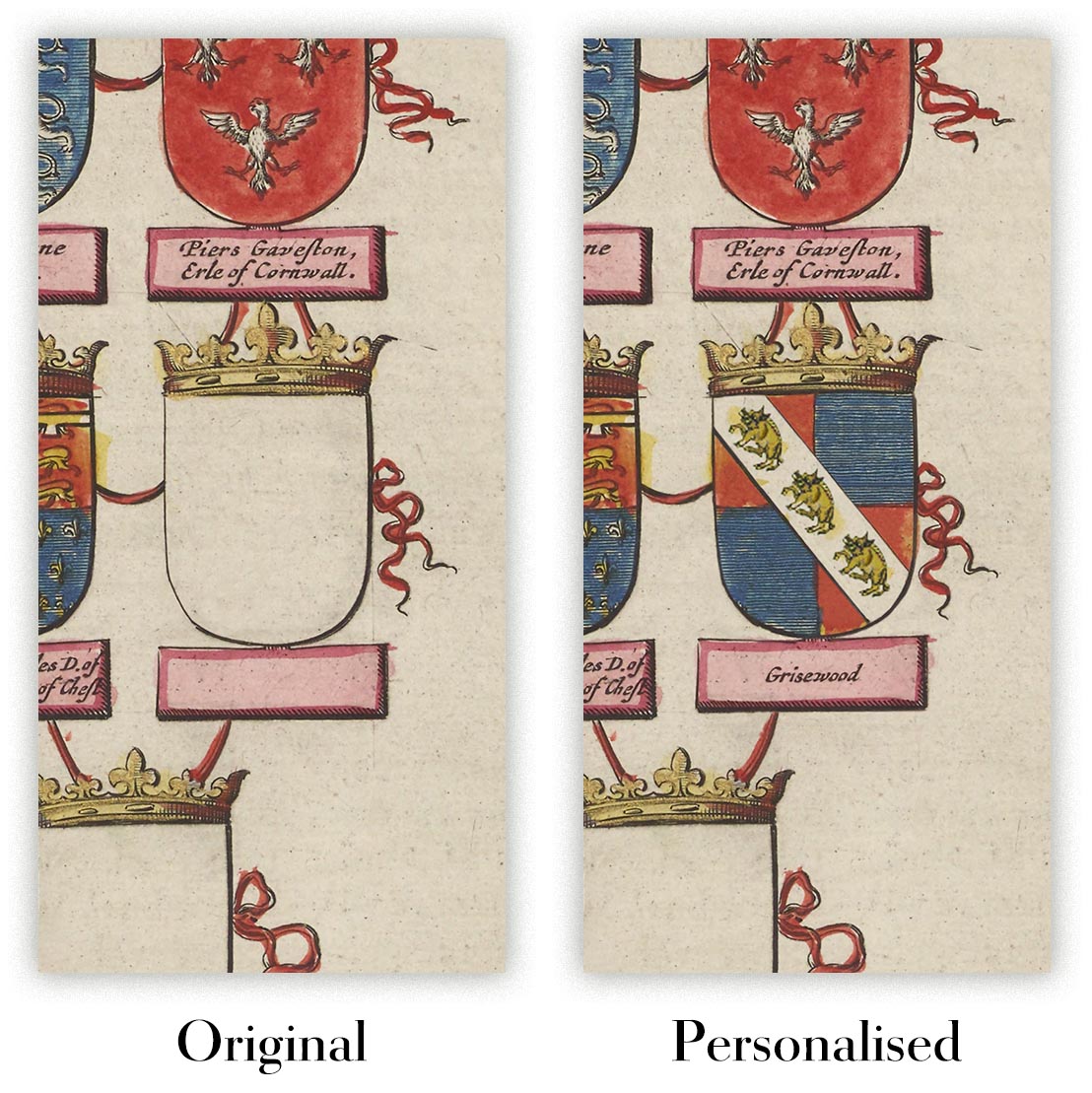
Personalización de mapas
Si está buscando el regalo perfecto de aniversario o inauguración de la casa, puedo personalizar su mapa para hacerlo verdaderamente único. Por ejemplo, puedo agregar un mensaje corto, resaltar una ubicación importante o agregar el escudo de armas de su familia.
Las opciones son casi infinitas. Por favor mira mi página de personalización de mapas para ver algunos maravillosos ejemplos de lo que es posible.
Para pedir un mapa personalizado, seleccione "personalizar su mapa" antes de agregarlo a su carrito.
Ponerse en contacto si buscas personalizaciones y personalizaciones más complejas.
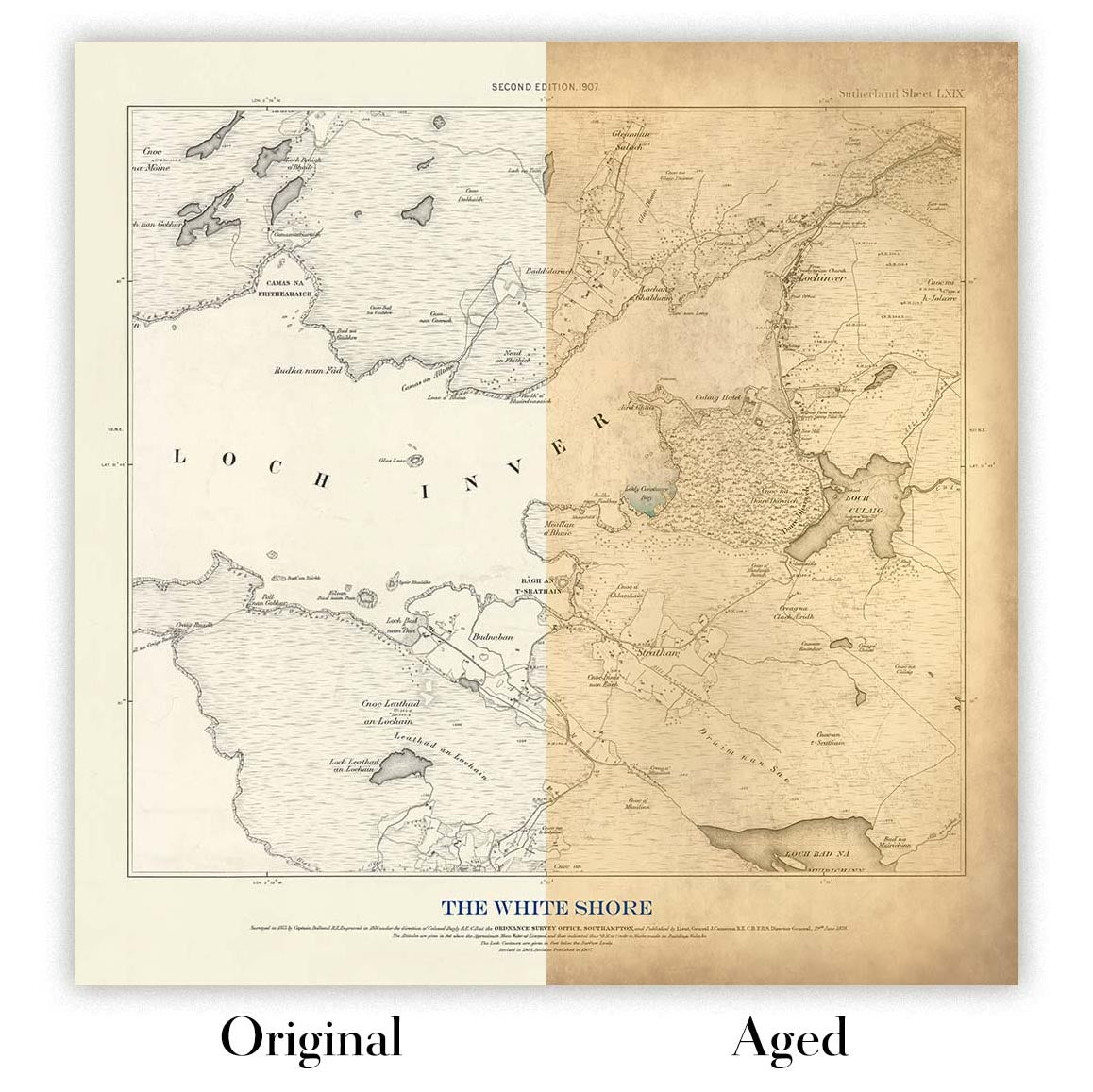
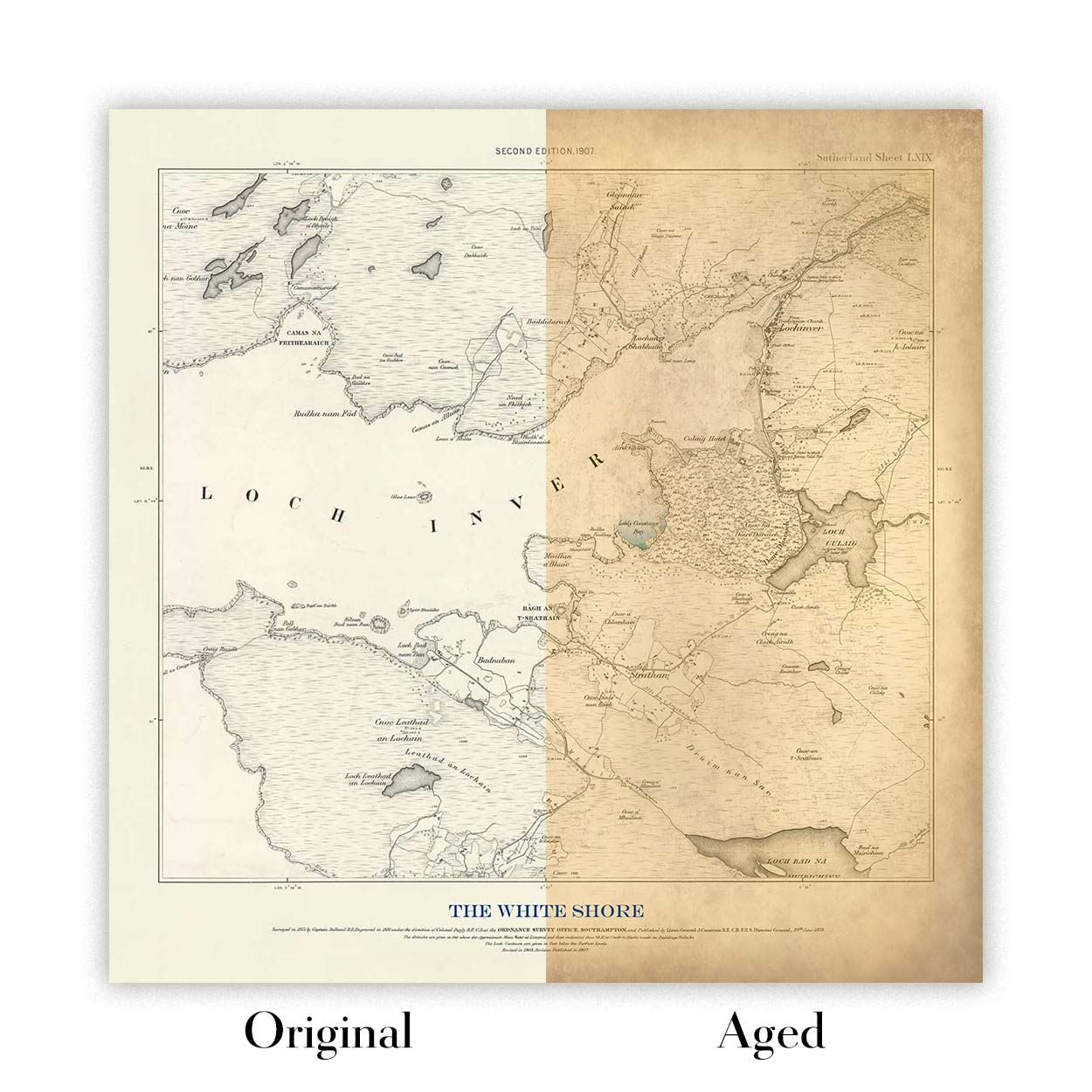
Envejecimiento del mapa
A lo largo de los años, los clientes me han preguntado cientos de veces si podían comprar un mapa que se viera uniforme. más viejo.
Bueno, ahora puedes hacerlo seleccionando Envejecido antes de agregar un mapa a tu carrito.
Todas las fotografías de productos que ve en esta página muestran el mapa en su forma original. Así es como se ve el mapa hoy.
Si selecciona Envejecido, envejeceré su mapa a mano, usando un proceso especial y único desarrollado a través de años de estudiar mapas antiguos, hablar con investigadores para comprender la química del envejecimiento del papel y, por supuesto... ¡mucha práctica!
Si no estás seguro, quédate con el color original del mapa. Si quieres algo un poco más oscuro y más viejo buscando, opte por Envejecido.
Llevamos restaurando y produciendo mapas y láminas artísticas desde 1984, y respondemos por cada pieza.
Todos los pedidos están cubiertos por nuestra garantía de 10 años y nuestra garantía de entrega sin daños. Si su pieza llega dañada, la sustituiremos o la volveremos a producir sin cargo alguno. Si cualquier otro aspecto no es correcto, contacte con nuestro equipo de taller y lo resolveremos con prontitud.
Consulte nuestra política de devoluciones y reembolsos para conocer todos los detalles.


